
December 2025 From subjects to collaborators: centering sanitation workers in research Abubaker Semukoteka and Sterenn Philippe
Brilliant sanitation team at the branch office of Fort portal
December 2025 From subjects to collaborators: centering sanitation workers in research Abubaker Semukoteka and Sterenn Philippe
In 2023, ISW launched the second phase of its Research Support Grants with a bold shift: positioning sanitation workers not as subjects of study, but as central actors in the research process. Among the grantees, the Brilliant Sanitation Limited (BSL) partnered with the Urban Action Lab (UAL), Makerere University, to investigate an important question: “What are the intended and unintended consequences of sanitation workers’ formalization and visibility enrichment in Kampala city?” To reflect on this inclusive research approach, we spoke with Abubaker Semukoteka—representative of the Association’s manual emptiers, and CEO and founder of Brilliant Sanitation Uganda Limited, a pioneering pit-emptying and fecal sludge transportation service in Kampala.
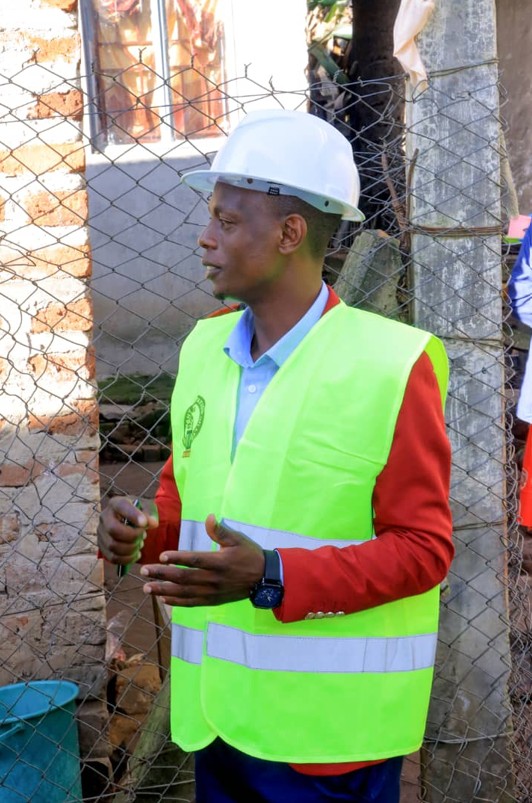
Semukoteka Abubaker CEO of Brilliant Sanitation Uganda Ltd
Q: How was your experience collaborating with the research institution?
A: Working as collaborators with the research institution has been a transformative experience for both us and Urban Action Lab (UAL). From the very first day they were selected to conduct the research, we worked together. They first called me and my members to meet with their executive team so we could introduce ourselves and discuss what should be done, step by step. From then on, everything was collaborative—we were not just deployed to do a task, but were integral to the entire research process.
Q: How was this research different from previous studies?
A: Completely different. Before, researchers would come with pre-determined tools and methods. We were just contracted to collect samples, and once the samples were collected, that was the end. We never saw the results and were excluded from the process. This time, we felt the research was for us. We were part of every step: designing tools, collecting data, and understanding results. The key was that everything was done together—from start to finish. We felt like true collaborators, not just people being studied. That’s what made this research special.
Q: What helped solidify the collaboration between your association and the researchers?
A: What really solidified our collaboration was the formal partnership. We signed a Memorandum of Understanding with Urban Action Lab, which established clear roles, responsibilities, and expectations. This created a sense of ownership among all stakeholders.
Q: Did you feel your perspective was truly listened to?
A: Absolutely. We advised the researchers on everything—from which institutions to include, to how to safely collect data in challenging environments like treatment plants. We guided them on using Personal Protective Equipment and on connecting with hard-to-reach partners. We also ensured that the data collection tools were relevant and user-friendly for sanitation workers, and the researchers incorporated our feedback. Our influence was significant at every stage of the research.
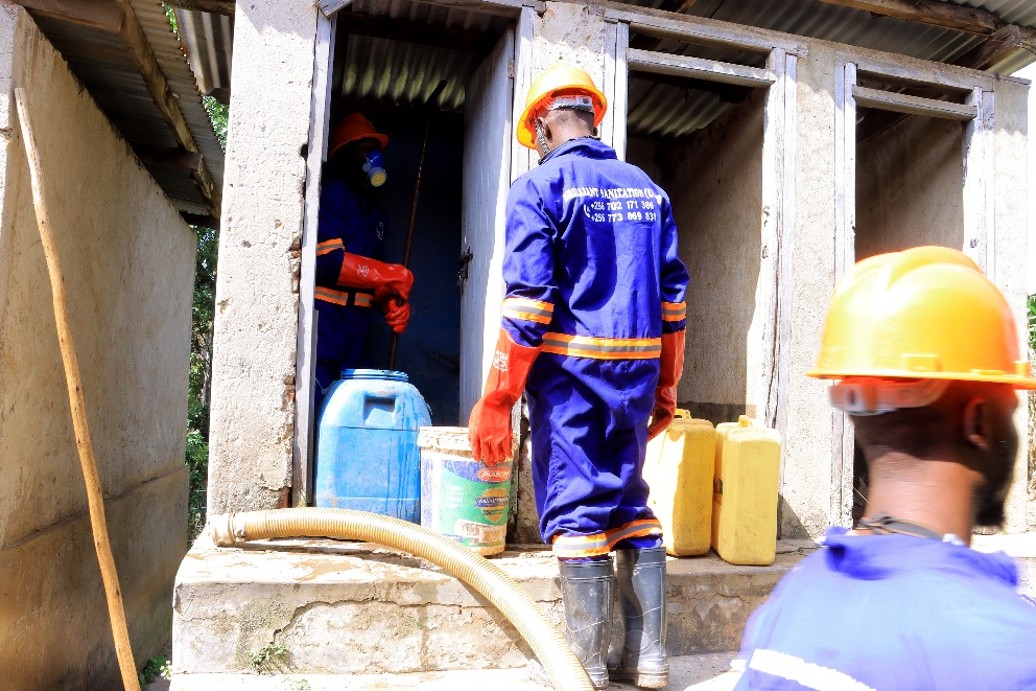
Brilliant sanitation team operating an ordinary toilet facility in the slums of Kampala using the semi mechanical system of emptying.
Q: What did you find valuable in your interactions with researchers? Did you face any challenges?
A: The interactions with researchers were largely positive, especially in terms of knowledge sharing and capacity building. The workshops we attended were particularly valuable for building our skills in knowledge production and dissemination. We did face some minor challenges at the start, with occasional misalignments in expectations around timelines and deliverables. But we addressed these issues through open communication and mutual understanding.
Q: How do you see this research impacting your association's priorities?
A: This research has the potential to significantly advance the association’s priorities, such as engaging policymakers and advocating for sanitation workers. For example, it has already helped us influence the Uganda Revenue Authority to reduce taxes on cesspool trucks, engage the Kampala City Authority and parish-level local councils to promote incentivization of sanitation services in communities, and put pressure on the Kampala Capital City Authority to release funds from the Revolving Fund. These funds were approved two years ago but have not yet been deposited. The research results are helping us advocate for their release.
Q: What’s next in terms of research?
A: We are still working with Urban Action Lab to ensure the best outcomes from this research through dissemination with different partners and stakeholders. But through this process, we have also become researchers ourselves. The experience we gained—organizing the research, designing tools, managing processes, reporting—has built our capacity to conduct research as sanitation workers. We even registered and obtained government certification to allow us to carry out our own research.
Other challenge identified: Some sanitation workers (more treatment plant workers) were skeptical and cautious about sharing information, with fear the information would be used for commerical reasons (e.g., competition). But since we have provided the research results to them, the sanitation workers are on board with future research collaboration.
Reflections on ISW: ISW's communication was excellent - they planned ahead, gave us time to prepare, and even helped us present our research internationally.