
January 2026 Relatively good working conditions alongside persistent stigma: the story of formal pit emptying workers in Lusaka, Zambia Shotaro Goto
Pit emptying workers filling barrels and loading them onto a truck. Shotaro Goto.
January 2026 Relatively good working conditions alongside persistent stigma: the story of formal pit emptying workers in Lusaka, Zambia Shotaro Goto
In Lusaka, Zambia, pit emptying is an essential yet often overlooked service that helps keep on-site sanitation systems properly functioning. This story focuses on pit emptying workers employed by seven formally registered companies and draws on fieldwork conducted by the author in Chawama, a peri-urban area of Lusaka.
The findings present a mixed picture; physical occupational health and safety conditions were relatively good and many workers reported earning more than in their previous jobs, but stigma and discrimination remained persistent and deeply felt challenges.
Context and approach
In Lusaka, formal pit emptying companies operate under permits issued by the Lusaka Water Supply and Sanitation Company (LWSC) and are required to follow standard operating procedures (SOPs) set by the utility. Operating formally also allows companies to access customers and receive subsidies through LWSC. When this study began in October 2023, eleventen companies were active in Lusaka, seven of them operating in Chawama.
Chawama is an unplanned peri-urban settlement with an estimated population of 210,000. It is densely populated, and most households rely on pit latrines for sanitation. To understand what pit emptying work looks like in this setting, we conducted interviews with managers from all seven companies and held focus group discussions (FGDs) with pit emptying workers from six of them.
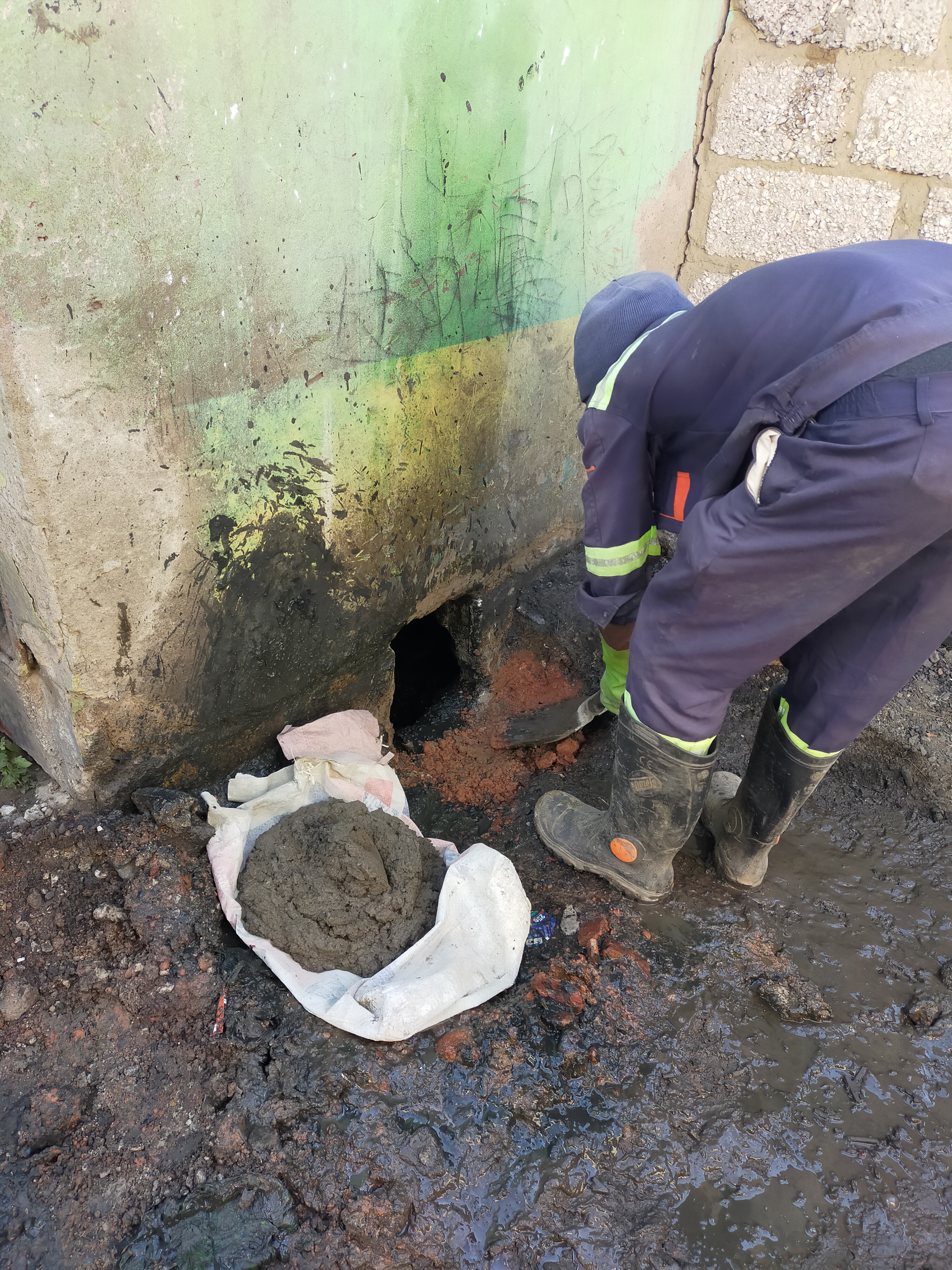
A pit emptying worker wearing PPE during pit latrine emptying. Shotaro Goto.
Physical occupational health and safety
Managers and pit emptying workers both described regular use of basic personal protective equipment (PPE) during emptying operations. This may, in part, reflect the influence of SOPs that require the use of PPE. Gloves, helmets, work clothes, and boots were standard, and some companies also used masks, goggles, and other protective items. This stands out given that limited or inconsistent PPE use has been reported in many other settings.
In most cases, the companies themselves purchased the equipment. All companies also provided training related to work procedures and occupational safety. This may have helped workers develop a general understanding of how PPE should be used and how it helps reduce health and safety risks.
When asked about illness and accidents, workers mentioned only a small number of incidents. These included minor injuries caused by damaged toilet structures and occasional chest pain during physically demanding work. No one spoke about major accidents or serious occupational illness. In other cities and countries, pit emptying workers have faced severe injuries and infections. Against that background, the situation among the pit emptying workers in this study appears relatively good. The combination of PPE use and safety training may be contributing to the reduction of more serious risks.
Wages and job applications among pit emptying workers
Income was another important theme. Many workers reported being satisfied with their wages or noted that their current income was higher than what they earned in previous jobs, such as construction work. According to managers, all but one company received more job applications than available positions. This suggests that, at least in this area, formal pit emptying is perceived as a comparatively attractive source of income. For many workers, earning more than in their previous employment was a clear motivation for taking up the job.
Stigma and discrimination
At the same time, stigma and discrimination came up in all FGDs. Workers spoke openly about being mocked, ignored, or treated with disrespect because of their work. Some recalled being called names such as “play feces,” while others described sarcastic comments. Several workers said these experiences weighed on them mentally.
One manager explained that the company had tried to address stigma by visiting communities and explaining why pit emptying is necessary. While such efforts were seen as important, workers felt that they had not yet led to noticeable changes in how they were treated.
In other countries, similar activities, including seminars on the rights and dignity of sanitation workers and media campaigns, have helped improve public understanding over time. Experiences elsewhere suggest that these approaches can be effective, but changing perceptions around sanitation work is often a slow process. In Lusaka as well, it may take sustained and long-term engagement before workers begin to feel a real difference in their daily interactions.
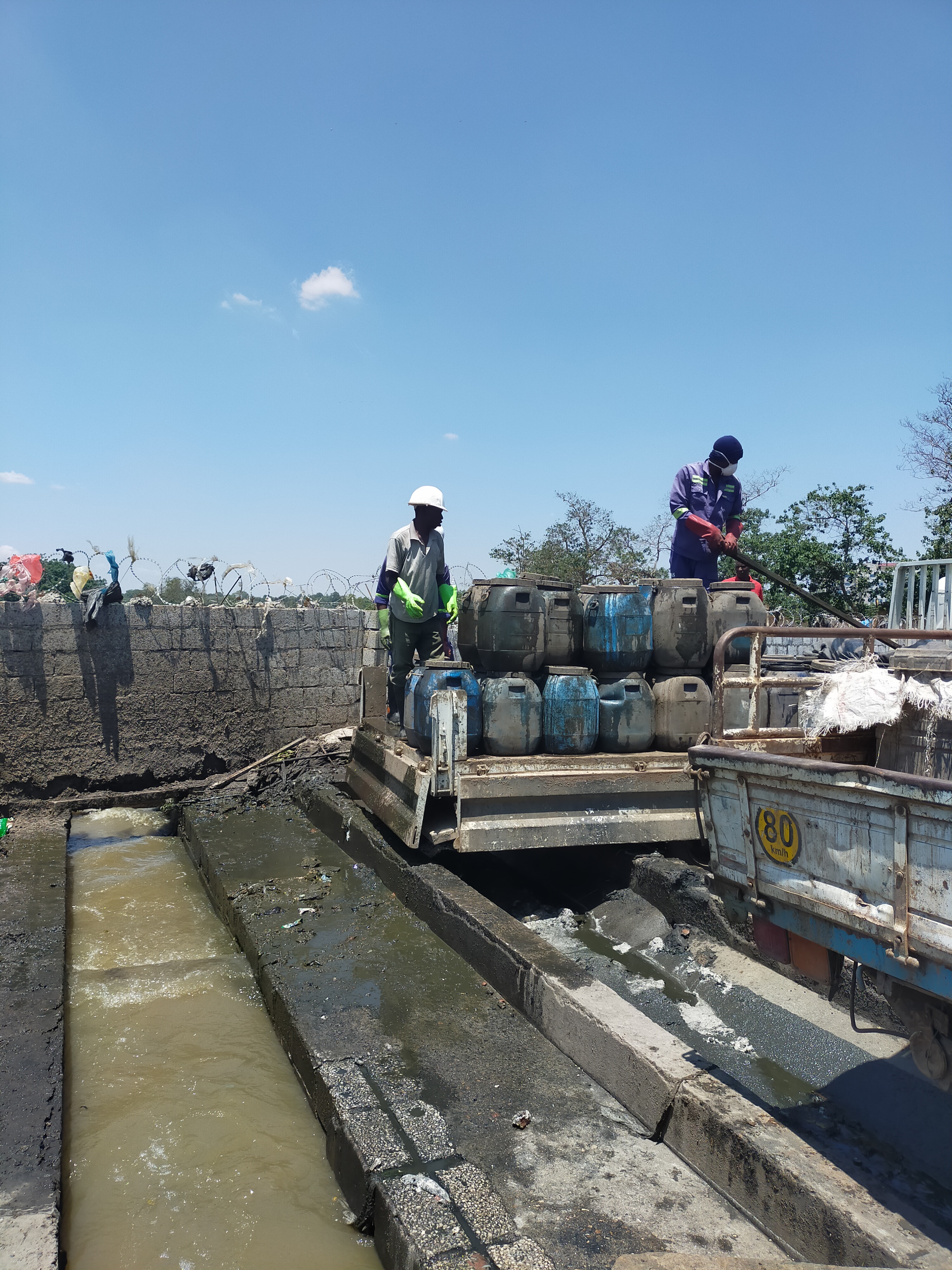
Discharging fecal sludge at a sludge treatment plant. Shotaro Goto.
Looking ahead
During this fieldwork, I travelled on the same truck as pit emptying workers and followed the entire process, from emptying to transport and delivery at a sludge treatment plant. What stayed with me was how much they were like anyone else. They were young men and middle-aged workers. Some talked about moving on if better opportunities appeared. Others had been doing this work for years.
Their job is essential for keeping pit latrines functioning for the many residents who depend on them. Yet this work continues under a cloud of stigma and discrimination. I hope that greater recognition of pit emptying, and of the people who do this work, will allow them to carry out their jobs with dignity, without discrimination, in the years to come.
This blog was written by Shotaro Goto, a PhD student at the Graduate School of Asian and African Area Studies, Kyoto University, Japan. This fieldwork was supported by JSPS KAKENHI (24K01014), JST/JICA SATREPS, and the Explore Program of the Graduate School of Asian and African Area Studies, Kyoto University.