
November 2026 From Bribes to Receipts: Why Nairobi’s Pit Emptiers Pay to Dump Safely Wali Mwalugongo Wali Mwalugongo, Francis Kuria, With voices of manual pit emptiers from Mukuru Kwa Njenga and Mukuru Kwa Reuben
Two manual pit emptiers bringing in “ambulances” to a pit sludge transfer centre for safe disposal
November 2026 From Bribes to Receipts: Why Nairobi’s Pit Emptiers Pay to Dump Safely Wali Mwalugongo Wali Mwalugongo, Francis Kuria, With voices of manual pit emptiers from Mukuru Kwa Njenga and Mukuru Kwa Reuben
Every working day in Mukuru, one of Nairobi’s largest informal settlements, manual pit emptiers discharge their barrels of pit latrine sludge at a waste transfer station (called “Mtaa Fresh Centres”) and pay for the service. They could still dump in the river for free. In their own words, here is why they don’t.
It is mid-morning at the Makao Bora Mtaa Fresh transfer station in Mukuru Kwa Njenga. A manual pit emptier wheels in his “ambulance” - a 200-litre barrel on a modified handcart filled to the brim with pit sludge - and tips it through the mesh screen into the holding tank. He rinses his equipment, hoses his gumboots, and then does something that still surprises visitors: he pays us. Fifty Kenyan shillings per barrel (about half a US dollar) via mobile money. He gets a confirmation message. A receipt. To understand why that receipt matters, you have to know what emptiers were paying before.
Mukuru’s pits fill fast, exhauster trucks cannot reach them, and there is no space to dig new ones. When we began engaging manual pit emptiers in 2016, pit emptying was treated as a crime. There was nowhere legal to discharge the waste, and they paid for it daily in bribes, in risk, and in dignity:
“Earlier on we used to do illegal dumping and the police took advantage of the situation. We used to empty waste in the river… in tunnels… in a manhole… We would be arrested and asked to defend ourselves. So instead of facing charges we would opt to pay a bribe from the little amount we had collected in a day.” - A Manual pit emptier, Mukuru Kwa Njenga
“At the riverbank there were fights all the time. One official would take the bribe money and then another comes to ask for money. You know, you cannot agree to pay twice, so it ends up in a fight.” - Manual pit emptier, Mukuru Kwa Reuben
That reframed everything for us at Fresh Life. The emptiers were never dumping “for free.” They were already paying. For terrible value.
In 2017 we piloted a transfer station program called “Mtaa Fresh” - Swahili for “Fresh Neighborhood” - designed around the emptiers’ existing routes, equipment and habits. It was free to use. They came, liked it and asked for more capacity. We asked ourselves - would they contribute to the running costs of the centres? Our first proposal was a flat KES 200 per day. They refused.
But having seen the potential benefits, they came back with a counter proposal of paying per barrel, because the flat fee we proposed punished those who worked less. We agreed on KES 30 per barrel. Eight months later, the fee was renegotiated upward, to KES 50, once the emptiers had experienced the reliability and improved services they had requested. Willingness to pay was never about price. It was the shift from unpredictable extortion to a fair, predictable fee for genuine value. From bribes to receipts.
What the fee bought reaches beyond a dumping point. The emptiers formalized their community-based organization and wrote rules stricter than anything we would have dared propose:
“They no longer harass us because we now have an appropriate place for dumping waste… We leave work clean, and people also respect the kind of work we do. There is a high level of discipline. No one comes to work drunk and there is a fine of KES 3,000 if you are drunk at work.” - A manual pit emptier, Mukuru Kwa Njenga
Daylight working hours. Rules of their own making. Respect. That is what the receipts stand for.
Honesty requires saying what the fee does not do: cover the cost. Running a transfer station costs far more than KES 50 per barrel, but we understand that emptiers cannot pay more. Landlords pay emptiers only about KES 350 per barrel, and efforts to support emptiers in passing along a higher cost to landlords have been unsuccessful. The gap to run our centers is met through grant funding, results-based financing, and partnerships, including with UNICEF Kenya and Nairobi City County. That is not a flaw. There is yet to be a model where user fees alone pay for safe sanitation. What the fee proves is something our sector has long doubted: informal sanitation workers will co-finance a service that respects them.
Since 2017, more than 19,271,584 litres of pit sludge that would have been discharged into waterways or the environment has safely passed through our Mtaa Fresh centres - barrel by barrel, receipt by receipt. We are writing down eight years of these lessons for others to use. If you work with manual emptiers anywhere in the world, or are planning to - talk to us.
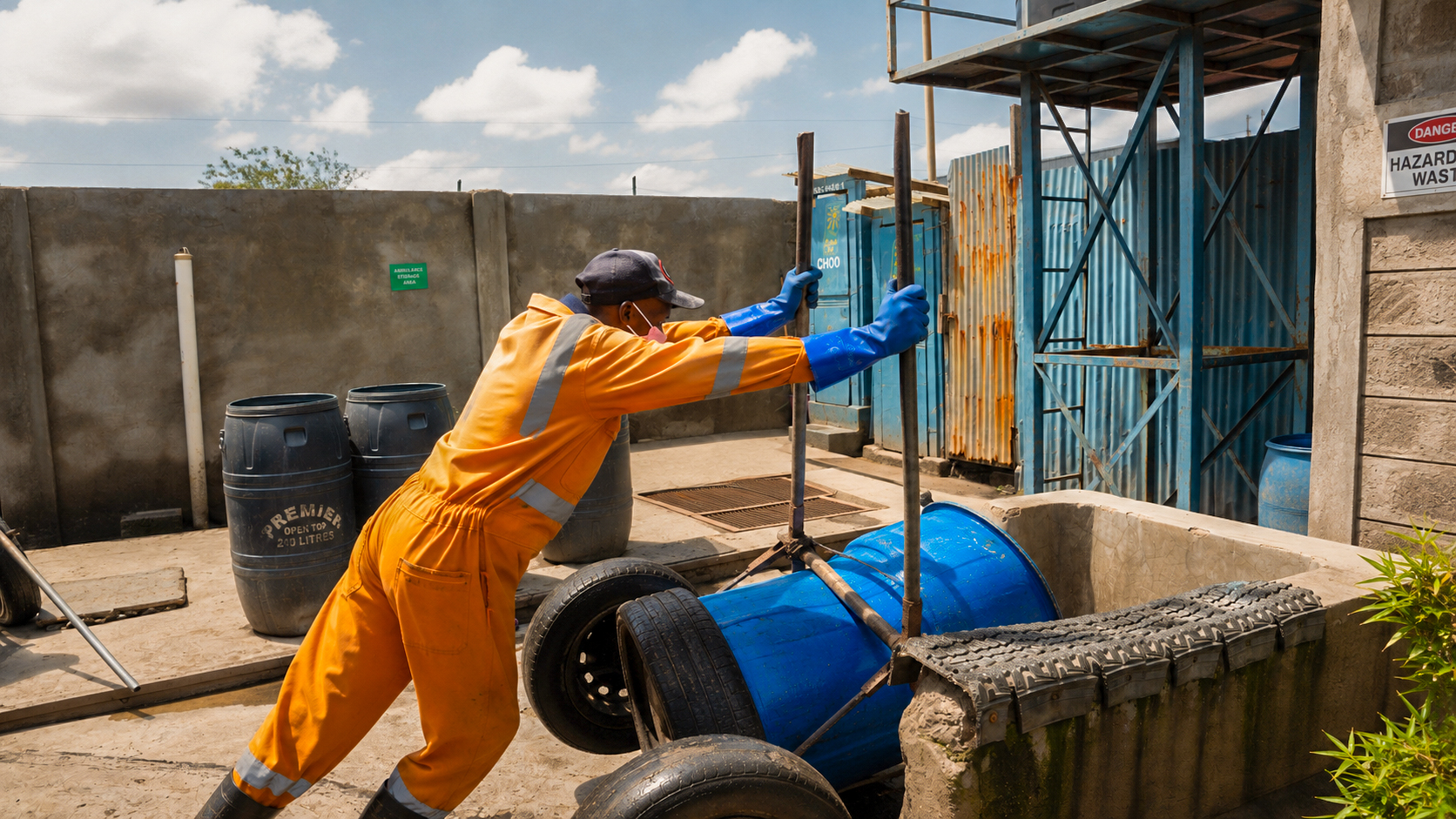
A manual pit emptier tipping off a barrel of pit sludge into a Mtaa Fresh Centre at Mukuru Kwa Reuben
Mukuru’s pits fill fast, exhauster trucks cannot reach them, and there is no space to dig new ones.
When we began engaging manual pit emptiers in 2016, pit emptying was treated as a crime. There was nowhere legal to discharge the waste, and they paid for it daily in bribes, in risk, and in dignity:
“Earlier on we used to do illegal dumping and the police took advantage of the situation. We
used to empty waste in the river… in tunnels… in a manhole… We would be arrested and
asked to defend ourselves. So instead of facing charges we would opt to pay a bribe from the
little amount we had collected in a day.” - A Manual pit emptier, Mukuru Kwa Njenga
“At the riverbank there were fights all the time. One official would take the bribe money and
then another comes to ask for money. You know, you cannot agree to pay twice, so it ends
up in a fight.” - Manual pit emptier, Mukuru Kwa Reuben
That reframed everything for us at Fresh Life. The emptiers were never dumping “for free.” They were
already paying. For terrible value.
In 2017 we piloted a transfer station program called “Mtaa Fresh” - Swahili for “Fresh Neighborhood” designed around the emptiers’ existing routes, equipment and habits. It was free to use. They came, liked it and asked for more capacity. We asked ourselves - would they contribute to the running costs of the centres? Our first proposal was a flat KES 200 per day. They refused.
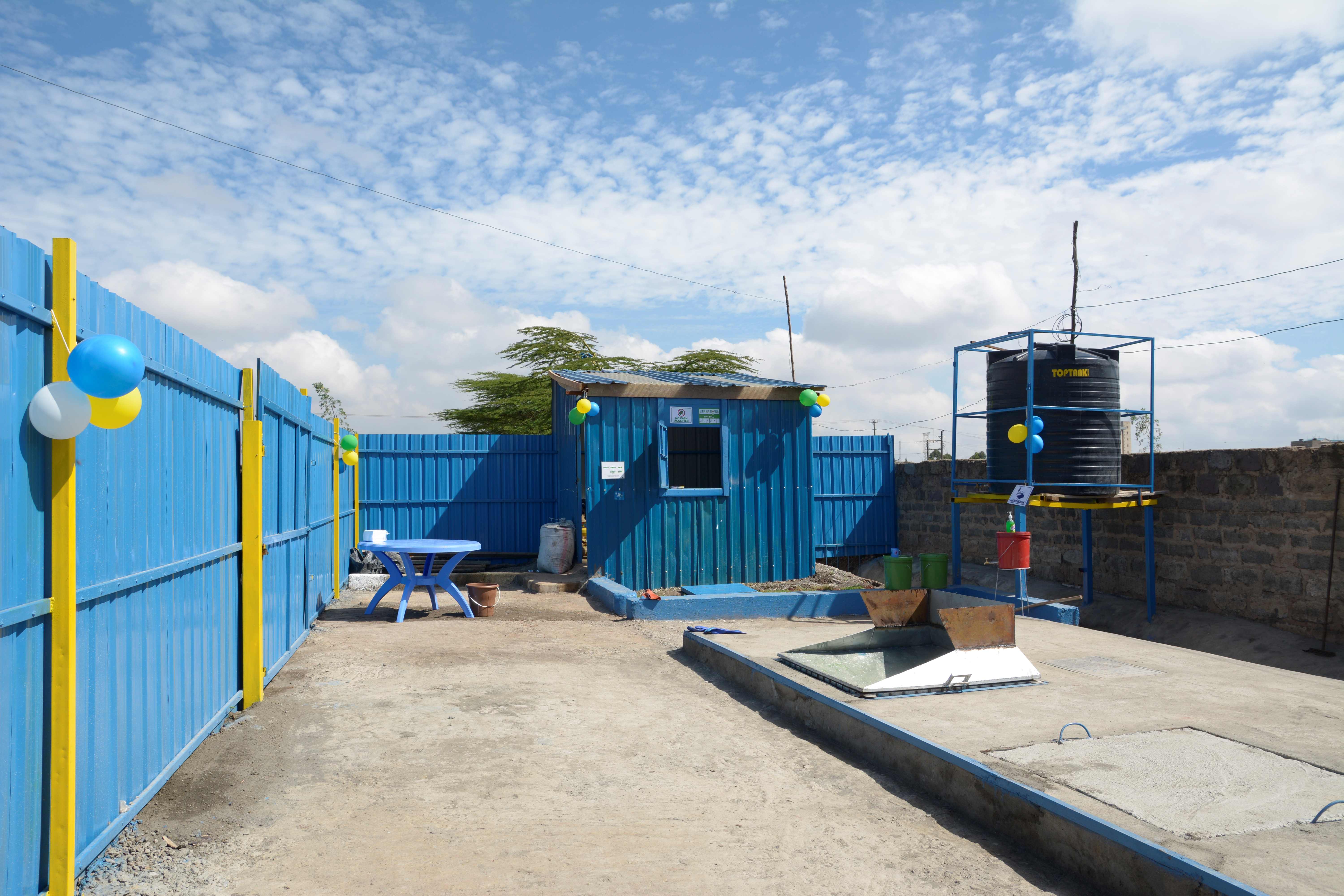
A newly launched Mtaa Fresh Centre in Nairobi
But having seen the potential benefits, they came back with a counter proposal of paying per barrel,
because the flat fee we proposed punished those who worked less. We agreed on KES 30 per barrel.
Eight months later, the fee was renegotiated upward, to KES 50, once the emptiers had experienced the reliability and improved services they had requested. Willingness to pay was never about price. It was the shift from unpredictable extortion to a fair, predictable fee for genuine value. From bribes to receipts.
What the fee bought reaches beyond a dumping point. The emptiers formalized their community-based organization and wrote rules stricter than anything we would have dared propose:
“They no longer harass us because we now have an appropriate place for dumping waste…
We leave work clean, and people also respect the kind of work we do. There is a high level of
discipline. No one comes to work drunk and there is a fine of KES 3,000 if you are drunk at
work.” - A manual pit emptier, Mukuru Kwa Njenga
Daylight working hours. Rules of their own making. Respect. That is what the receipts stand for.
Honesty requires saying what the fee does not do: cover the cost. Running a transfer station costs far
more than KES 50 per barrel, but we understand that emptiers cannot pay more. Landlords pay
emptiers only about KES 350 per barrel, and efforts to support emptiers in passing along a higher cost to landlords have been unsuccessful. The gap to run our centers is met through grant funding, results-based financing, and partnerships, including with UNICEF Kenya and Nairobi City County. That is not a flaw. There is yet to be a model where user fees alone pay for safe sanitation. What the fee proves is something our sector has long doubted: informal sanitation workers will co-finance a service that respects them.
Since 2017, more than 19,271,584 litres of pit sludge that would have been discharged into waterways or the environment has safely passed through our Mtaa Fresh centres - barrel by barrel, receipt by receipt. We are writing down eight years of these lessons for others to use. If you work with manual emptiers anywhere in the world, or are planning to - talk to us (info@fresh-life.org).
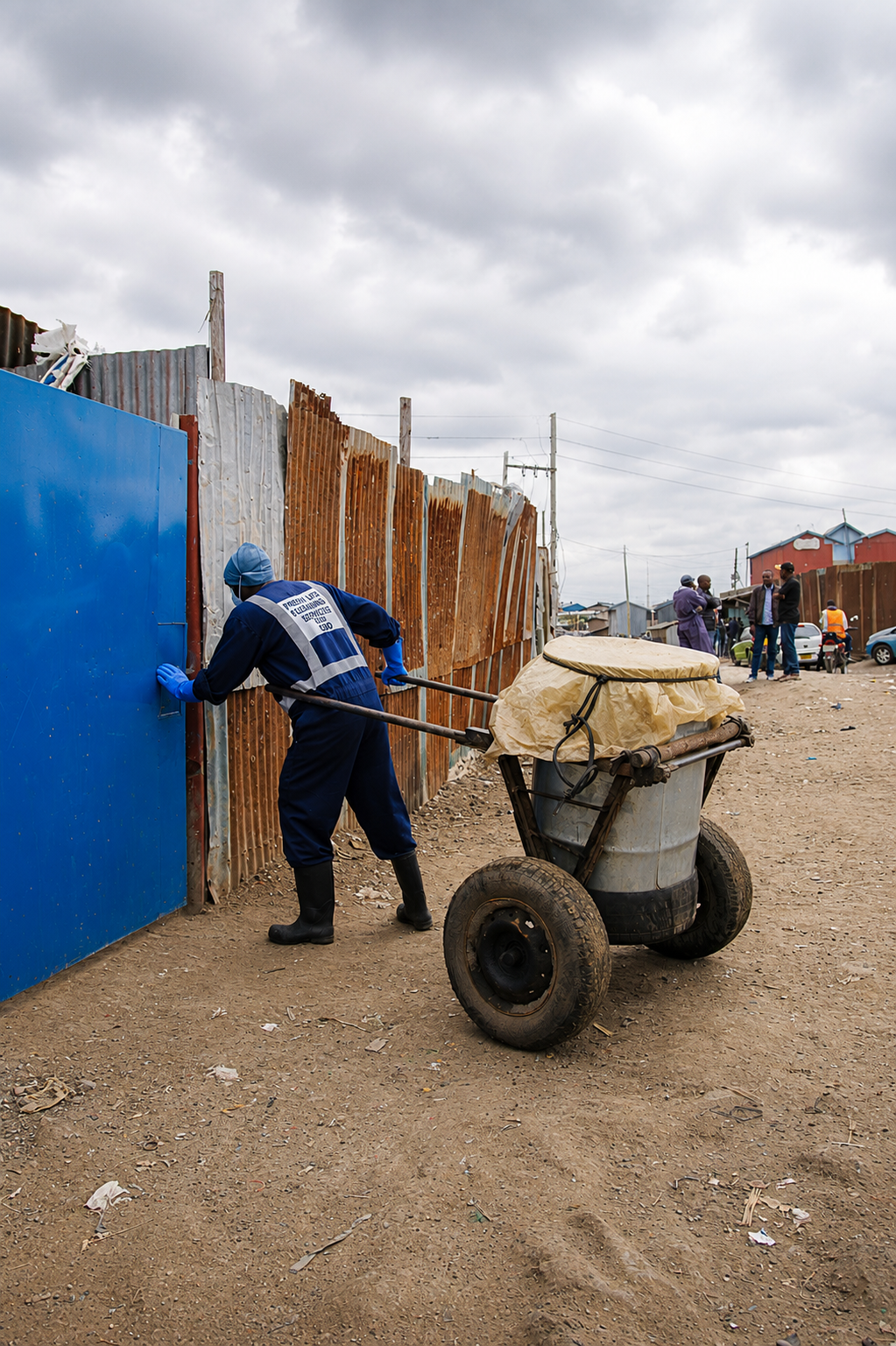
A manual pit emptier entering another Fresh Life Mtaa centre in the Mukuru Kwa Njenga community to dispose pit waste